
fidabekker.com

Uncategorized

Uncategorized

Digital marketing evolves fast, and separating solid advice from recycled fluff matters. Below is a curated list of established, trustworthy sources, along with what each is best known for.

Industry-Leading Blogs HubSpot Blog remains one of the most comprehensive resources for marketers at any level. It covers inbound marketing, SEO, content strategy, and sales alignment, backed by original research and data from HubSpot’s own customer base. Their annual “State of Marketing” reports are widely cited across the industry. Moz Blog is the go-to authority for SEO specifically. Founded by Rand Fishkin, Moz built its reputation on transparent, data-driven explanations of how search algorithms work. The “Whiteboard Friday” video series breaks down complex SEO concepts in digestible formats, and the community discussion in comments often adds real practitioner insight. Search Engine Journal (SEJ) and Search Engine Land both track algorithm updates, platform changes, and search marketing news almost in real time. These are essential if you need to stay current on Google or Bing policy shifts rather than evergreen strategy content. Neil Patel’s blog focuses heavily on SEO, content marketing, and growth tactics, often paired with free tools like Ubersuggest. His writing style is accessible for beginners, though some content leans promotional toward his own products, so cross-check claims elsewhere. Content Marketing Institute (CMI) is the definitive source if your focus is content strategy rather than paid acquisition. It publishes original benchmarking research annually, which is genuinely useful for justifying budgets or setting KPIs. Paid and Social Advertising WordStream specializes in PPC and paid social, with practical breakdowns of Google Ads and Meta Ads strategy, often including real account benchmarks segmented by industry. Social Media Examiner and Buffer’s blog are strong for social media specifically. Buffer in particular publishes transparent internal data about their own marketing experiments, which gives you a rare look at real numbers instead of theoretical advice. Analytics and Data-Driven Marketing Google’s own resources — Think with Google and the Google Analytics blog — are worth following directly since they explain platform changes from the source rather than through third-party interpretation. Similarly, Meta for Business publishes updates on ad platform changes and case studies. Backlinko, run by Brian Dean, is smaller in volume but known for meticulous, research-backed SEO case studies. Each post tends to be exhaustive rather than frequent, so it’s a good supplement rather than a daily read. Newsletters Worth Subscribing To Beyond blogs, a few newsletters are worth mentioning: *Marketing Brew, **The Hustle, and *Exploding Topics deliver bite-sized industry news and emerging trend spotting, which is useful for staying ahead of shifts before they hit mainstream blogs. How to Evaluate Any Source Rather than treating any list — including this one — as gospel, it helps to apply a few filters when deciding whether a blog deserves a spot in your regular reading: A Note on Avoiding Plagiarism When Writing Content If you’re using these sources as research for your own digital marketing content, a few practices keep your writing original and defensible: Building a rotation of 4–5 blogs from the list above, rather than trying to follow all of them, is usually enough to stay current without becoming overwhelming. HubSpot and Moz cover the broadest ground if you want just two starting points. Want me to put this into a downloadable document, or help you draft an original blog post on a specific digital marketing topic using these sources for reference?

Uncategorized

How to Promote a New Business Online (Without Wasting Your Money on Things That Don’t Work)

Starting a business is the easy part, honestly. Getting people to actually know it exists? That’s where most new owners get stuck. You post a few times on Instagram, maybe run one ad, and then… crickets. Sound familiar?Here’s the thing: promoting a business online isn’t about doing everything. It’s about doing a handful of things consistently, in the right order. Below is a practical breakdown of what actually moves the needle for a new business trying to get noticed.

Uncategorized

Digital Marketing Courses That Actually Work in 2026 — My Honest Take

Hey everyone, welcome back to the channel! So I’ve been getting this question a lot lately in my DMs and comments — “Which digital marketing course should I join in 2026?” And honestly, I understand the confusion. Open any app right now and you’ll see ten ads promising you’ll become a “digital marketing expert” in 30 days, earn six figures, quit your job, all that. I’ve tried a bunch of these courses myself over the years, recommended a few to friends and cousins, and today I just want to sit down and talk to you honestly — no script, no sponsorship, just what I’ve actually seen work. The Problem With Most Courses Right Now Let’s be real for a second. A lot of these courses in 2026 are basically the same PDF slides repackaged with a new thumbnail. They teach you Facebook Ads the same way they taught it in 2019 — ignoring the fact that platforms change every few months, AI tools have taken over half the manual work, and clients today expect a completely different skill set. Another thing I’ve noticed — a lot of these courses are recorded once and never updated again. You pay a good amount of money, and two years later the content is outdated but you’re still watching the same videos. That’s the biggest trap. What I Actually Recommend Instead of naming ten random courses (because honestly, what works for me might not work for you), let me tell you what to look for, because that matters more than any specific brand name. 1. Look for courses that update content regularly Anything worth your money in 2026 should be updated at least every 6 months. Ask the instructor directly — “when was this last updated?” If they hesitate, that’s your answer. 2. Practical work over theory The good ones make you actually run a small campaign, write real ad copy, build a real landing page — not just watch someone talk for hours. If there’s no hands-on project by week two, skip it. 3. Community and mentorship matter more than the videos Honestly, the video content is maybe 30% of the value. The other 70% is having people to ask doubts, get feedback on your actual work, and see what real campaigns look like. A course with an active WhatsApp or Discord group full of people actually working is worth ten times more than a fancy video library with no support. 4. Check who’s teaching it Not the marketing on their sales page — actually search their name, check if they run real client accounts, look at their own social proof. Someone who’s actively doing the work is very different from someone who just teaches about it. A Word on Free Resources Before you spend a single rupee, know that platforms like Google, Meta, and HubSpot still offer free certifications that are genuinely solid for beginners. Start there, build a small portfolio doing free work for a local shop or a friend’s business, and then decide if a paid course is even necessary for you. My Honest Suggestion If you’re just starting out — go free first. Build one small project. Then, if you feel you need structure and mentorship, pick a course based on the four points I mentioned above, not because an ad convinced you at 11pm scrolling Instagram. And please, please stop believing anyone who promises guaranteed income in 30 days. Marketing takes time to learn properly, just like any real skill. That’s it for today’s video. If this helped even a little, do share it with someone who’s confused about where to start. See you in the next one!

Uncategorized

What Is Digital Marketing? A Complete Beginner’s Guide (2026)

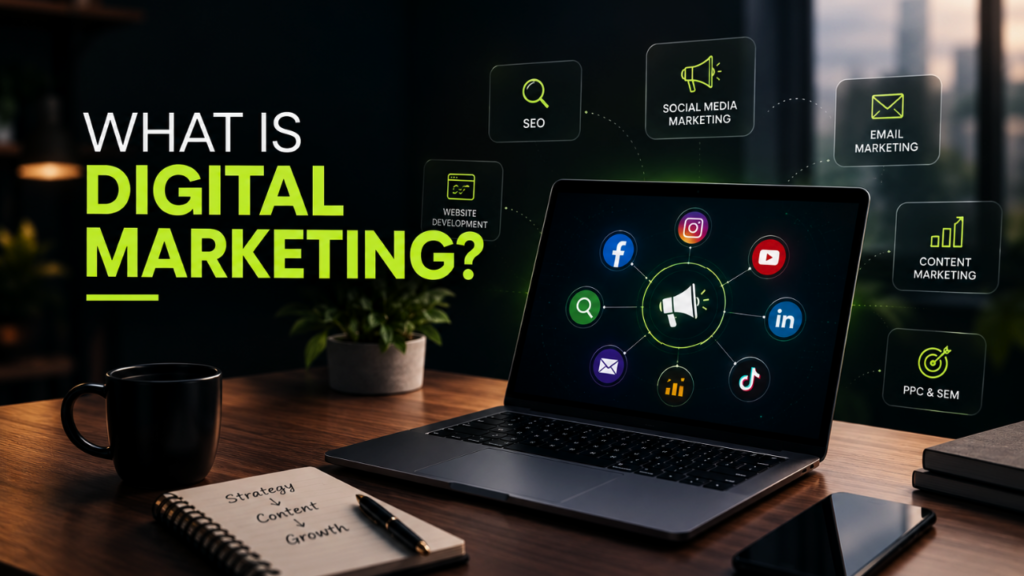
What Is Digital Marketing?Digital marketing is the process of promoting products or services using online channels such as search engines, social media platforms, websites, email, and paid advertising. Unlike traditional marketing, digital marketing allows businesses to connect with the right audience, measure campaign performance, and improve results using real-time data. Today, customers search online before making almost every buying decision. Whether someone wants to purchase a product, book a service, or compare prices, their journey usually starts on Google or social media. That’s why digital marketing has become one of the most important investments for businesses of every size. If you’re a business owner looking to grow online, understanding digital marketing is the first step toward attracting more customers and increasing sales. Why Is Digital Marketing Important?The internet has changed the way people discover brands and make purchasing decisions. A strong digital presence helps businesses reach potential customers where they spend most of their time—online. Here are some of the biggest benefits of digital marketing: Reach customers anywhere in the world. Target the right audience based on interests, location, and behavior. Generate high-quality leads. Increase website traffic. Improve brand awareness. Track every click, conversion, and sale. Achieve better return on investment compared to many traditional advertising methods. Whether you own a local shop, restaurant, startup, or established company, digital marketing helps you compete in today’s market. How Does Digital Marketing Work?Digital marketing works by attracting potential customers through different online channels and guiding them toward taking a desired action, such as making a purchase, filling out a contact form, or requesting a quote. A typical customer journey looks like this: A customer searches on Google or sees your advertisement. They visit your website or social media profile. They learn about your products or services. They contact your business or make a purchase. You continue building the relationship through email or remarketing campaigns. Every stage can be measured and improved to increase conversions. Types of Digital Marketing SEO includes: Keyword research On-page optimization Technical SEO Content creation Link building Local SEO A well-optimized website can generate consistent organic traffic for years. Google Ads allows businesses to appear at the top of search results immediately, helping them reach customers who are actively searching for their services. SEM is ideal for: Lead generation Local businesses E-commerce Service providers Facebook Instagram LinkedIn YouTube X (formerly Twitter) Businesses use social media to educate customers, build trust, and generate leads Popular content formats include: Blog posts Videos Infographics Case studies Guides Podcasts Helpful content builds authority and improves search rankings. It remains one of the highest-return marketing channels because it reaches people who have already shown interest in your business. Leads Sales Website conversions App installs Businesses pay based on actual performance, making it a highly efficient marketing strategy. Essential Digital Marketing ChannelsSuccessful businesses usually combine multiple channels: Google Search Google Ads Facebook Ads Instagram LinkedIn YouTube Email Marketing Websites Landing Pages Google Business Profile Using several channels together creates a stronger online presence. Skills Every Digital Marketer Should LearnModern digital marketers should understand: Search Engine Optimization (SEO) Google Ads Meta Ads Social Media Marketing Content Marketing Copywriting Analytics Conversion Rate Optimization Keyword Research Web Development basics Artificial Intelligence (AI) tools Learning these skills helps create campaigns that deliver measurable results. Benefits of Digital Marketing for BusinessesDigital marketing offers several advantages: Lower marketing costs Better audience targeting Increased visibility More qualified leads Improved customer engagement Real-time reporting Better return on investment Scalable business growth Unlike traditional advertising, digital marketing allows businesses to adjust campaigns instantly based on performance. Common Digital Marketing MistakesMany businesses struggle because they: Build websites without SEO. Ignore mobile users. Publish inconsistent content. Target the wrong audience. Don’t measure campaign performance. Depend on only one marketing channel. Neglect website speed and user experience. Avoiding these mistakes can significantly improve marketing results. How AI Is Transforming Digital MarketingArtificial Intelligence is changing the marketing landscape by helping businesses: Generate content ideas. Analyze customer behavior. Automate repetitive tasks. Improve advertising performance. Personalize customer experiences. Predict trends using data. Businesses that combine AI with human creativity can work more efficiently and make better marketing decisions. Digital Marketing Trends in 2026Some of the most important trends include: AI-powered marketing Voice search optimization Video-first content Personalization Zero-click search optimization First-party data strategies Local SEO Automation Conversational marketing Performance-focused advertising Keeping up with these trends helps businesses stay competitive. How to Get Started with Digital MarketingIf you’re new to digital marketing, follow these steps: Build a professional website. Understand your target audience. Conduct keyword research. Optimize your website for SEO. Create valuable content regularly. Use social media consistently. Run targeted Google and Meta Ads. Measure results using analytics. Improve campaigns based on data. Continue learning and adapting. Consistency is more important than perfection.

Scroll to Top