

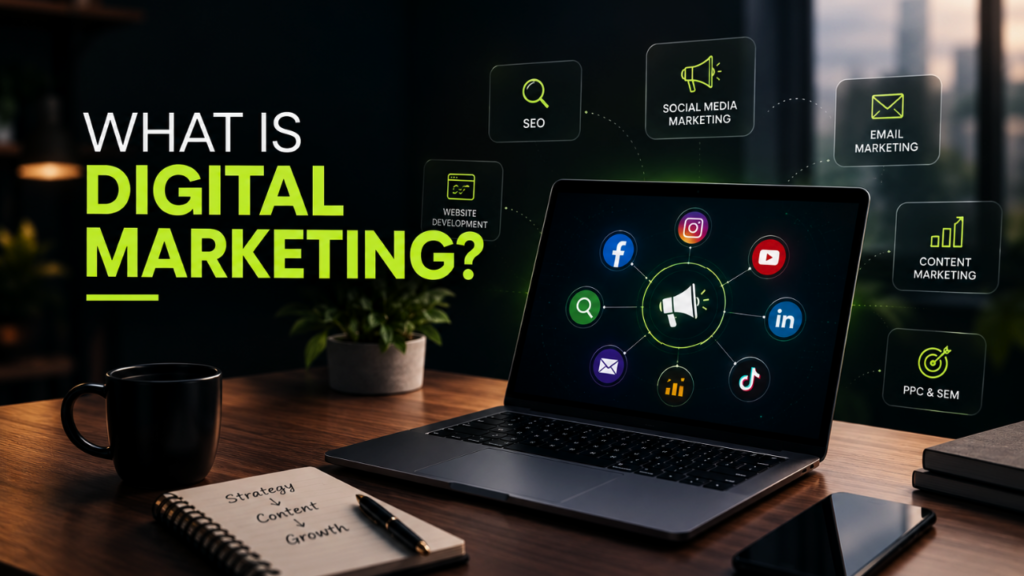
What Is Digital Marketing?
Digital marketing is the process of promoting products or services using online channels such as search engines, social media platforms, websites, email, and paid advertising. Unlike traditional marketing, digital marketing allows businesses to connect with the right audience, measure campaign performance, and improve results using real-time data.
Today, customers search online before making almost every buying decision. Whether someone wants to purchase a product, book a service, or compare prices, their journey usually starts on Google or social media. That’s why digital marketing has become one of the most important investments for businesses of every size.
If you’re a business owner looking to grow online, understanding digital marketing is the first step toward attracting more customers and increasing sales.
Why Is Digital Marketing Important?
The internet has changed the way people discover brands and make purchasing decisions. A strong digital presence helps businesses reach potential customers where they spend most of their time—online.
Here are some of the biggest benefits of digital marketing:
Reach customers anywhere in the world.
Target the right audience based on interests, location, and behavior.
Generate high-quality leads.
Increase website traffic.
Improve brand awareness.
Track every click, conversion, and sale.
Achieve better return on investment compared to many traditional advertising methods.
Whether you own a local shop, restaurant, startup, or established company, digital marketing helps you compete in today’s market.
How Does Digital Marketing Work?
Digital marketing works by attracting potential customers through different online channels and guiding them toward taking a desired action, such as making a purchase, filling out a contact form, or requesting a quote.
A typical customer journey looks like this:
A customer searches on Google or sees your advertisement.
They visit your website or social media profile.
They learn about your products or services.
They contact your business or make a purchase.
You continue building the relationship through email or remarketing campaigns.
Every stage can be measured and improved to increase conversions.
Types of Digital Marketing
- Search Engine Optimization (SEO)
SEO is the process of improving your website so it appears higher in search engine results without paying for advertisements.
SEO includes:
Keyword research
On-page optimization
Technical SEO
Content creation
Link building
Local SEO
A well-optimized website can generate consistent organic traffic for years.
- Search Engine Marketing (SEM)
SEM involves paid advertisements on search engines like Google.
Google Ads allows businesses to appear at the top of search results immediately, helping them reach customers who are actively searching for their services.
SEM is ideal for:
Lead generation
Local businesses
E-commerce
Service providers
- Social Media Marketing
Social media marketing focuses on building brand awareness and engaging audiences on platforms such as:
YouTube
X (formerly Twitter)
Businesses use social media to educate customers, build trust, and generate leads
- Content Marketing
Content marketing involves creating valuable information that helps potential customers solve problems.
Popular content formats include:
Blog posts
Videos
Infographics
Case studies
Guides
Podcasts
Helpful content builds authority and improves search rankings.
- Email Marketing
Email marketing helps businesses stay connected with customers by sending newsletters, offers, product updates, and personalized messages.
It remains one of the highest-return marketing channels because it reaches people who have already shown interest in your business.
- Performance Marketing
Performance marketing focuses on measurable business outcomes such as:
Leads
Sales
Website conversions
App installs
Businesses pay based on actual performance, making it a highly efficient marketing strategy.
- Affiliate Marketing
Affiliate marketing allows individuals or businesses to promote products in exchange for a commission whenever someone makes a purchase through their referral. - Influencer Marketing
Influencer marketing involves collaborating with creators who have established audiences. Their recommendations can help businesses increase brand awareness and sales.
Essential Digital Marketing Channels
Successful businesses usually combine multiple channels:
Google Search
Google Ads
Facebook Ads
YouTube
Email Marketing
Websites
Landing Pages
Google Business Profile
Using several channels together creates a stronger online presence.
Skills Every Digital Marketer Should Learn
Modern digital marketers should understand:
Search Engine Optimization (SEO)
Google Ads
Meta Ads
Social Media Marketing
Content Marketing
Copywriting
Analytics
Conversion Rate Optimization
Keyword Research
Web Development basics
Artificial Intelligence (AI) tools
Learning these skills helps create campaigns that deliver measurable results.
Benefits of Digital Marketing for Businesses
Digital marketing offers several advantages:
Lower marketing costs
Better audience targeting
Increased visibility
More qualified leads
Improved customer engagement
Real-time reporting
Better return on investment
Scalable business growth
Unlike traditional advertising, digital marketing allows businesses to adjust campaigns instantly based on performance.
Common Digital Marketing Mistakes
Many businesses struggle because they:
Build websites without SEO.
Ignore mobile users.
Publish inconsistent content.
Target the wrong audience.
Don’t measure campaign performance.
Depend on only one marketing channel.
Neglect website speed and user experience.
Avoiding these mistakes can significantly improve marketing results.
How AI Is Transforming Digital Marketing
Artificial Intelligence is changing the marketing landscape by helping businesses:
Generate content ideas.
Analyze customer behavior.
Automate repetitive tasks.
Improve advertising performance.
Personalize customer experiences.
Predict trends using data.
Businesses that combine AI with human creativity can work more efficiently and make better marketing decisions.
Digital Marketing Trends in 2026
Some of the most important trends include:
AI-powered marketing
Voice search optimization
Video-first content
Personalization
Zero-click search optimization
First-party data strategies
Local SEO
Automation
Conversational marketing
Performance-focused advertising
Keeping up with these trends helps businesses stay competitive.
How to Get Started with Digital Marketing
If you’re new to digital marketing, follow these steps:
Build a professional website.
Understand your target audience.
Conduct keyword research.
Optimize your website for SEO.
Create valuable content regularly.
Use social media consistently.
Run targeted Google and Meta Ads.
Measure results using analytics.
Improve campaigns based on data.
Continue learning and adapting.
Consistency is more important than perfection.